
94 lines
13 KiB
Markdown
94 lines
13 KiB
Markdown
tags:: cycling
|
||
source: https://www.trainerroad.com/blog/coach-chads-strength-training-recommendations-for-cyclists/
|
||
---
|
||
|
||
- Strength Training Benchmarks for Cyclists - TrainerRoad Blog
|
||
|
||
> ## Excerpt
|
||
> Cyclists, triathletes and all endurance athletes need strength training to be faster, stronger and healthier athletes. These are our recommendations.
|
||
|
||
---
|
||
To be a faster cyclist, you need to be a strong cyclist. Strength limitations are too commonly a performance limiter whether riders recognize it or not. These limitations also correlate strongly with bone deficiency and muscle atrophy in the lesser-used, ‘non-cycling’ muscles, so strength training should not be neglected.
|
||
|
||
We’ve created a set of strength benchmarks that we feel should serve as strength goals for three different groups of cyclists. Rather than a strength training plan, remember, these are goals to strive for.
|
||
|
||
To get started check out our article, [Strength Training Basics for Cyclists](https://www.trainerroad.com/blog/strength-training-basics-for-cyclists/), and use our [Strength Training for Cyclists Weight Calculator](https://www.trainerroad.com/strength-training-calculator?utm_source=TrainerRoad%20Blog&utm_medium=referral&utm_campaign=Strength%20Training%20Recommendations&utm_content=top-text-cta) to find out what weight you would need to use.
|
||
- Strength That Makes You Faster
|
||
|
||
We’ve assigned three levels to endurance athletes ascending from Level One (Basic strength requirements) to Level Two (Intermediate strength requirements) to Level Three (Advanced strength requirements). These requirements are based on our perception of the differing strength demands of particular cycling disciplines.
|
||
|
||
Careful consideration has been given to the mass:benefit ratio, i.e., the performance benefit of added muscle mass related to the amount of work necessary to carry the added body weight. For example, the benefit of one added pound of mass seen by a criterium racer is likely to be greater than that seen by a pure climber. Consideration has also been given to the need for greater strength requirements during longer, multi-hour events.
|
||
|
||
Adaptive Training
|
||
|
||
**Get the right workout, every time** with training that adapts to you.
|
||
|
||
[Check Out TrainerRoad](https://www.trainerroad.com/adaptive-training/)
|
||
- Level Three (Sprinter)
|
||
|
||
_Criterium Racers, Short Track Cross-Country Mountain Bikers, Gravity-Oriented Mountain Bikers, Enduro Racers, Cyclocross Racers, Track Sprinters_
|
||
- Level Three – Men
|
||
|
||
<table><tbody><tr><td><strong>Exercise</strong></td><td><strong>Prescription</strong></td><td><strong>Example Prescription (175lb/80kg)</strong></td></tr><tr><td>Deadlift</td><td>5 Reps 150% BW</td><td>260 lbs / 120 kg</td></tr><tr><td>Back Squat</td><td>5 Reps 125% BW</td><td>220 lbs / 100 kg</td></tr><tr><td>Bench Press</td><td>5 Reps 90% BW</td><td>165 lbs / 75 kg</td></tr><tr><td>Barbell Row</td><td>5 Reps 90% BW</td><td>165 lbs / 75 kg</td></tr><tr><td>Pull/Chin-Ups</td><td>Number of Reps</td><td>15 Reps</td></tr><tr><td>Military Press</td><td>5 Reps 55% BW</td><td>100 lbs / 45 kg</td></tr></tbody></table>
|
||
- Level Three – Women
|
||
|
||
<table><tbody><tr><td><strong>Exercise</strong></td><td><strong>Prescription</strong></td><td><strong>Example Prescription (135lb/60kg)</strong></td></tr><tr><td>Deadlift</td><td>5 Reps 105% BW</td><td>140 lbs / 65 kg</td></tr><tr><td>Back Squat</td><td>5 Reps 87% BW</td><td>120 lbs / 55 kg</td></tr><tr><td>Bench Press</td><td>5 Reps 65% BW</td><td>90 lbs / 40 kg</td></tr><tr><td>Barbell Row</td><td>5 Reps 65% BW</td><td>90 lbs / 40 kg</td></tr><tr><td>Pull/Chin-Ups</td><td>Number of Reps</td><td>5 Reps</td></tr><tr><td>Military Press</td><td>5 Reps 40% BW</td><td>55 lbs / 25 kg</td></tr></tbody></table>
|
||
- Level Two (All-Rounder)
|
||
|
||
_Cross-Country Mountain Bikers, Time Trialists, Rolling Road Racers, Cross-Country Marathon Mountain Bikers, Full-Distance Triathletes, Endurance Track Cyclists_
|
||
- Level Two – Men
|
||
|
||
<table><tbody><tr><td><strong>Exercise</strong></td><td><strong>Prescription</strong></td><td><strong>Example Prescription (175lb/80kg)</strong></td></tr><tr><td>Deadlift</td><td>5 Reps 100% BW</td><td>175 lbs / 80 kg</td></tr><tr><td>Back Squat</td><td>5 Reps 75% BW</td><td>130 lbs / 60 kg</td></tr><tr><td>Bench Press</td><td>5 Reps 55% BW</td><td>100 lbs / 45 kg</td></tr><tr><td>Barbell Row</td><td>5 Reps 55% BW</td><td>100 lbs / 45 kg</td></tr><tr><td>Pull/Chin-Ups</td><td>Number of Reps</td><td>10 Reps</td></tr><tr><td>Military Press</td><td>5 Reps 35% BW</td><td>60 lbs / 30 kg</td></tr></tbody></table>
|
||
- Level Two – Women
|
||
|
||
<table><tbody><tr><td><strong>Exercise</strong></td><td><strong>Prescription</strong></td><td><strong>Example Prescription (135lb/60kg)</strong></td></tr><tr><td>Deadlift</td><td>5 Reps 70% BW</td><td>95 lbs / 45 kg</td></tr><tr><td>Back Squat</td><td>5 Reps 50% BW</td><td>70 lbs / 30 kg</td></tr><tr><td>Bench Press</td><td>5 Reps 40% BW</td><td>55 lbs / 25 kg</td></tr><tr><td>Barbell Row</td><td>5 Reps 40% BW</td><td>55 lbs / 25 kg</td></tr><tr><td>Pull/Chin-Ups</td><td>Number of Reps</td><td>3 Reps</td></tr><tr><td>Military Press</td><td>5 Reps 20% BW</td><td>30 lbs / 15 kg</td></tr></tbody></table>
|
||
- Level One (Climber)
|
||
|
||
_Climbing Road Racers, Sprint Triathletes, Olympic Distance Triathletes, Half-Distance Triathletes, Gravel Racers, Gran Fondo Riders_
|
||
- Level One – Men
|
||
|
||
<table><tbody><tr><td><strong>Exercise</strong></td><td><strong>Prescription</strong></td><td><strong>Example Prescription (175lb/80kg)</strong></td></tr><tr><td>Deadlift</td><td>5 Reps 75% BW</td><td>130 lbs / 60 kg</td></tr><tr><td>Back Squat</td><td>5 Reps 50% BW</td><td>90 lbs / 40 kg</td></tr><tr><td>Bench Press</td><td>5 Reps 40% BW</td><td>70 lbs / 30 kg</td></tr><tr><td>Barbell Row</td><td>5 Reps 40% BW</td><td>70 lbs / 30 kg</td></tr><tr><td>Pull/Chin-Ups</td><td>Number of Reps</td><td>5 Reps</td></tr><tr><td>Military Press</td><td>5 Reps 20% BW</td><td>40 lbs / 20 kg</td></tr></tbody></table>
|
||
- Level One – Women
|
||
|
||
<table><tbody><tr><td><strong>Exercise</strong></td><td><strong>Prescription</strong></td><td><strong>Example Prescription (135lb/60kg)</strong></td></tr><tr><td>Deadlift</td><td>5 Reps 50% BW</td><td>70 lbs / 30 kg</td></tr><tr><td>Back Squat</td><td>5 Reps 35% BW</td><td>50 lbs / 20 kg</td></tr><tr><td>Bench Press</td><td>5 Reps 25% BW</td><td>35 lbs / 15 kg</td></tr><tr><td>Barbell Row</td><td>5 Reps 25% BW</td><td>35 lbs / 15 kg</td></tr><tr><td>Pull/Chin-Ups</td><td>Number of Reps</td><td>1 Reps</td></tr><tr><td>Military Press</td><td>5 Reps 15% BW</td><td>20 lbs / 10 kg</td></tr></tbody></table>
|
||
- How to Use These Benchmarks
|
||
|
||
Firstly, please remember these are subjective benchmarks that, if reached, we feel will qualify you as a sufficiently strong athlete.
|
||
|
||
All benchmarks are relative to body weight. To remove the guesswork, use our [Strength Training for Cyclists Weight Calculator](https://www.trainerroad.com/strength-training-calculator). Pull-Up/Chin-Up recommendations are based on our personal views. When necessary, round the specific weight recommendations to the nearest five pound increment for practical purposes.
|
||
|
||
Women’s benchmarks are based on 70% of men’s recommendations for lower body lifts. If you feel the need to adjust these further, please do! We want you to be training at the right intensity.
|
||
|
||
All of these benchmarks are aimed solely at endurance athletes concerned with enhancing their endurance capabilities, improving their basic quality of movement in day-to-day life, decreasing their likelihood on crash-related injuries, and decreasing their odds of bone mass loss and related diseases as well as decreasing the rate of muscle loss that takes place with aging and/or disuse–these standards won’t stand up when leveled at dedicated strength athletes.
|
||
|
||
Past Level Three requirements, we don’t see the benefit of added strength outweighing the penalty of added body mass and excess time spent training strength over endurance. In other words, the endurance performance returns diminish too far when strength training is emphasized too much.
|
||
- How to Integrate Strength Training Into TrainerRoad
|
||
|
||
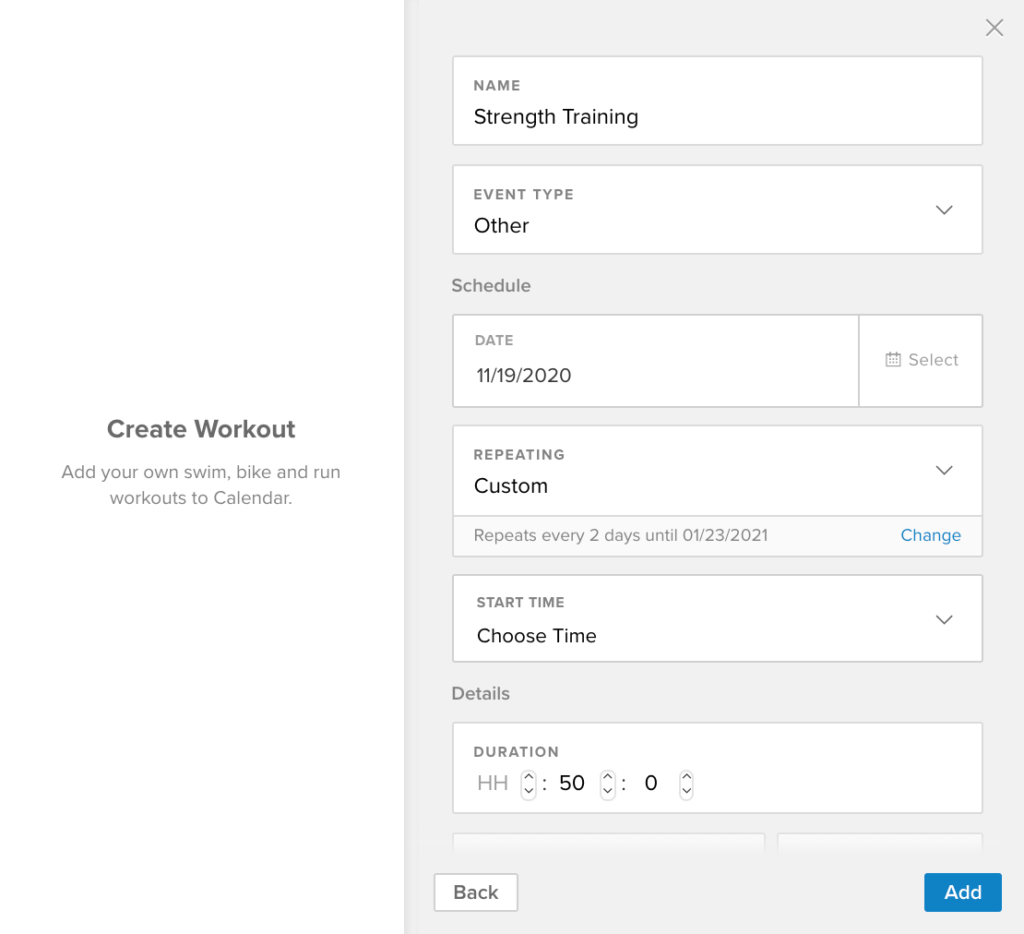
The flexibility of TrainerRoad’s calendar makes it easy to plan your strength training workouts and account for its estimated TSS in your weekly data. You can set a custom schedule for your workouts to repeat after a certain number of days, add your strength training routine, and schedule a specific time for your workout so you can maximize both your endurance and strength gains.
|
||
|
||
_Want to check out all the flexibility TrainerRoad’s calendar has to offer? [Check out more here.](https://www.trainerroad.com/cycling-training-calendar)_
|
||
|
||
|
||
- Frequently Asked Questions
|
||
- **Is this a strength training plan?**
|
||
No. These are merely benchmarks. We recommend working with a competent strength training coach that is familiar with training endurance athletes in order to reach these goals.
|
||
- **How do I figure out how much weight I need?**
|
||
Use our [Strength Training for Cyclists Weight Calculator](https://www.trainerroad.com/strength-training-calculator)!
|
||
- **When should I incorporate strength training during my training week?**
|
||
Getting stronger and getting faster both require adequate recovery, so scheduling your strength training on recovery days is seldom a good idea. Performing your strength work later in the same day as your tougher endurance work allows you to reap better training benefits thanks to higher-quality recovery. Ideally, separate your strength training from your endurance training as much as possible within the same day. For example, perform an endurance workout in the morning, then perform your strength training as late in the day as possible (or vice versa) without negatively impacting your sleep.
|
||
- **Do I have to wait until the off-season to start strength training?**
|
||
No. Strength training is a year-round necessity if you want to maintain any strength gains you’ve established. Typically, the Base phase is the best time to maximize the volume of strength training (2-3x/week), the Build phase is a good time to transition into heavier lifting (2x/week), and the Specialty phase is the proper time to enter into maintenance training (1-2x/week).
|
||
- **How much rest between sets?**
|
||
In the interest of furthering strength with no concern for metabolic conditioning (you’ll get that on the bike), recovery between exercises should be thorough. Recovering for at least 3 minutes before repeating an exercise is sufficient when pursuing improvements in strength since it’s the minimum time necessary to adequately restore your [anaerobic](https://www.trainerroad.com/blog/the-aerobic-energy-system-what-it-is-why-its-important-and-how-to-train-it/) energy stores for another round of work.
|
||
- **What if I’m stronger than these goals?**
|
||
Then you’re already as strong as we deem necessary to perform well as an endurance athlete. This probably means that strength deficiency isn’t one of your performance limiters. Further gains are always at your discretion, but we strongly feel that they’re not likely to further enhance your endurance capabilities.
|
||
- **I’m very bad at pull-ups, any tips?**
|
||
The use of rubber bands like Rogue’s Monster Bands is a great option for anyone training alone. Another option for those training solo is the use of eccentric reps (negatives) or holds. Eccentric reps mean you’ll start with your chin above the bar and slowly descend to the bottom of the movement over the course of a few or several seconds. Holds start with your chin above the bar as well, but this time you simply hang there and resist gravity as long as possible. The use of a spotter to assist your pull-ups is another option.
|
||
- **Should I split my exercise into different days? (Upper vs Lower, etc.)**
|
||
Split routines are an excellent way to break up strength training, and they’re definitely an option, but they add another workout to your calendar and potentially absorb another possibility for recovery. But if your schedule accommodates a split routine, you can separate your exercises into pushing days & pulling days or upper body & lower body days.
|
||
- **Can I do variations of any of these exercises? For example dumbbell bench press instead of barbell bench press?**
|
||
Variations are always welcome and encouraged, especially if your gains have plateaued below your goal weights or reps. But if you’re looking to adhere to our particular movement/weight recommendations, variations should be used supplementally rather than as replacements for the exercises we’ve specified.
|
||
- **Do I have to do all the exercises in the same session in order for it to count?**
|
||
No. You can achieve all of your goal weights/reps on different days as long as they aren’t separated by an unreasonable length of time. Ideally, you’ll complete all of your goal weight/reps within the same week.
|
||
|
||
**_For more cycling training knowledge, listen to [The Ask a Cycling Coach — the only podcast dedicated to making you a faster cyclist](http://www.trainerroad.com/podcast). New episodes are released weekly._** |